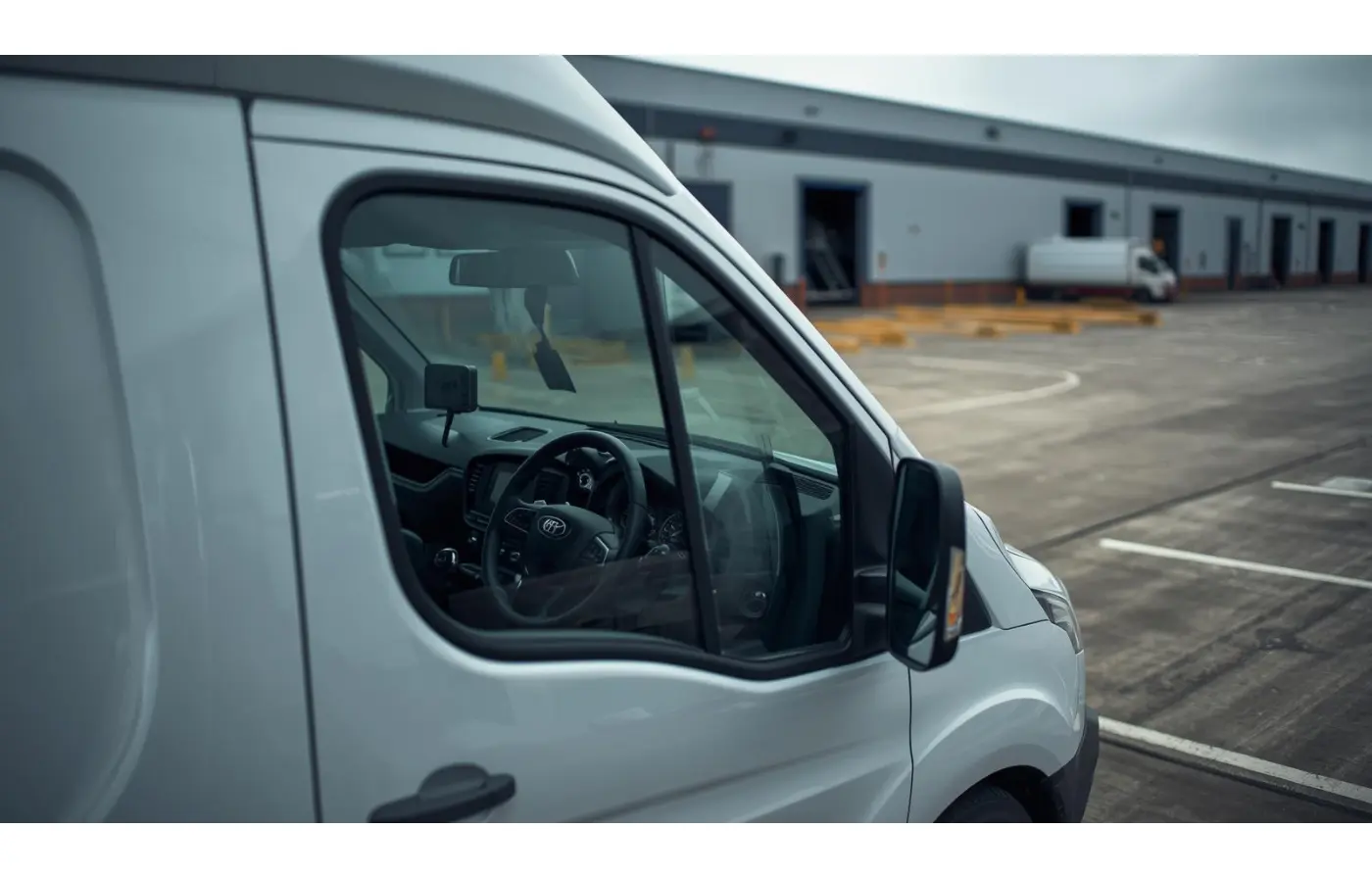
For most van operators in the UK, tachographs have never been a day-to-day concern. That changes on 1 July 2026. From that date, light goods vehicles over 2.5 tonnes used for international hire and reward journeys between the UK and EU must have a Smart Tachograph 2 fitted and comply with the assimilated drivers’ hours rules.
The DVSA has already issued direct guidance to operators. Workshop books are filling fast, and the average lead time for fitting appointments is already running at four to six weeks. If you run any vans doing cross-Channel or EU work, this is the time to check your position and act.
From 1 July 2026, light commercial vehicles between 2.5 tonnes and 3.5 tonnes will require a smart tachograph when used for international transport for hire and reward. In these cases, vehicles must be fitted with a second-generation smart tachograph, known as the Smart Tacho 2 or G2V2.
The full smart tachograph 2 must be fitted into goods vehicles over 2.5 tonnes used for international journeys for hire and reward. Goods vehicles weighing over 2.5 tonnes and less than 3.5 tonnes that are used only within the UK do not need a tachograph fitted.
It is worth noting that this is not the first regulatory shift for this segment. Since May 2022, operators using vans or vehicle and trailer combinations over 2.5 tonnes for hire or reward in the EU have been required to hold a standard international operator licence. The July 2026 change builds on this by introducing tachograph and drivers’ hours requirements.
The rules apply if your vehicle or vehicle and trailer combination:
There are two key exemptions. A vehicle does not need a Smart Tachograph 2 if:
| Important: Trailer combinations count If your van is under 2.5 tonnes on its own but you attach a trailer that takes the total combination over 2.5 tonnes, you are in scope for any international hire and reward work. The threshold applies to the vehicle combination, not the tractor unit alone. Operators making only occasional international deliveries must still comply fully, including journeys where your van is travelling empty across borders with the intention of collecting a commercial cargo. |
Smart Tachograph 2 is a significant advancement on previous tachograph technology. Unlike earlier units, the generation 2 system automatically records border crossings between EU member states, eliminating manual entry requirements and reducing the scope for record manipulation.
There are two variants: a full unit and a transitional unit. The difference is that the transitional unit does not include the Galileo location verification facility within its software. From 1 July 2026, a full Smart Tachograph 2 is required for vehicles newly coming into scope under these rules. A transitional unit is not sufficient.
The new Smart Tacho 2 also features DSRC (Dedicated Short-Range Communications), which allows enforcement officers to remotely interrogate a vehicle’s tachograph as it drives past, checking for power interruptions or sensor faults without pulling the driver over. This form of enforcement is already active in parts of Europe, and DVSA capability in this area continues to expand.
Once a vehicle comes into scope, its driver must comply with the assimilated EU drivers’ hours rules in full, the same framework already applied to HGV drivers. The key limits are:
For many van fleet operators, the biggest practical change is not the installation of the tachograph itself, but entering the full working-time regime: rest control, record-keeping, and documentation that most have not previously needed to manage.
Drivers will also need a digital driver card. Each card must be downloaded at least once every 28 days, and vehicle unit data must be downloaded every 90 days. Drivers must be able to produce records covering the current day and the previous 56 days on international runs. This 56-day requirement, increased from the previous 28-day obligation, is already an active area of enforcement focus at roadside.
Book tachograph fitting now
The DVSA has confirmed that the average lead time for fitting bookings is around four to six weeks. Some workshops are reporting longer waits as the deadline approaches. Many vans in this weight category were not originally designed with a dedicated space for a tachograph unit, meaning additional vehicle modifications may be required, adding both time and cost.
Apply for driver cards
Any driver operating an in-scope vehicle must hold a digital tachograph driver card. Applications go through DVLA. Allow time for processing, particularly for drivers who have not previously needed a card.
Obtain a company card
As an operator, you will need a company card in order to download vehicle unit data. This is a separate requirement from the driver card.
Put download and analysis systems in place
A Smart Tachograph 2 generates data that must be downloaded, stored, and analysed for compliance purposes. At LMG Shopper, we stock a range of digital tachograph download tools, including handheld units, driver card readers, and tachograph analysis software. If your fleet is entering tachograph territory for the first time, getting the right equipment in place before July is as important as the fitting itself.
Train your drivers
Van drivers who have never operated under tachograph rules will need to understand how to use the equipment correctly, when to insert and remove their driver card, and how breaks and rest periods must be recorded. Errors in tachograph records, even unintentional ones, can create the appearance of falsification during an enforcement check.
Review your operational processes
The scheduling and rostering approach that has worked for unregulated van operations may not translate directly into a compliant tachograph environment. Route planning, shift lengths, and handover times all need assessing against the new drivers’ hours limits before July arrives.
If your vehicles never cross an international border, the July 2026 rules do not apply. Vans between 2.5 and 3.5 tonnes operating solely within the UK remain outside the tachograph requirement for this weight category.
However, if any vehicle in your fleet undertakes even occasional international work, it falls into scope for those journeys. It is also worth confirming your trailer position: a van that sits under 2.5 tonnes on its own but regularly hauls a trailer taking the combination over that threshold is in scope for any international hire and reward work.
The DVSA has confirmed that enforcement will be immediate and uncompromising from 1 July. Vehicles found operating internationally without compliant tachograph systems face prohibition notices, financial penalties, and potential impacts on Operator Compliance Risk Scores (OCRS). For operators already holding an international operator licence, a compliance failure of this kind can escalate to a Traffic Commissioner public inquiry.
There is also a practical commercial risk. Vans that have operated with minimal regulatory friction will now face the same time and compliance constraints as trucks, including daily driving limits and mandatory rest periods. Operators who have not restructured their schedules and route planning in advance will find the transition harder and more disruptive once July arrives.
If you are unsure whether the July 2026 rules apply to your operation, or you need to assess your current compliance position, our team can help. A transport compliance audit will identify any gaps in your documentation, processes, and equipment before DVSA enforcement does. We can also advise on drivers’ hours training for staff who are new to tachograph-regulated work.
For tachograph download equipment, driver card readers, tachograph rolls, and analysis tools, visit LMG Shopper for the full range.
Contact the Lloyd Morgan Group team on 01543 897505 or get in touch via our contact page.







Email us at:
[email protected]
Find us at:
Lloyd Morgan Group Ltd
Phoenix House,
Hemlock Park,
Hyssop Close,
Cannock.
WS11 7GA