No products in the basket.
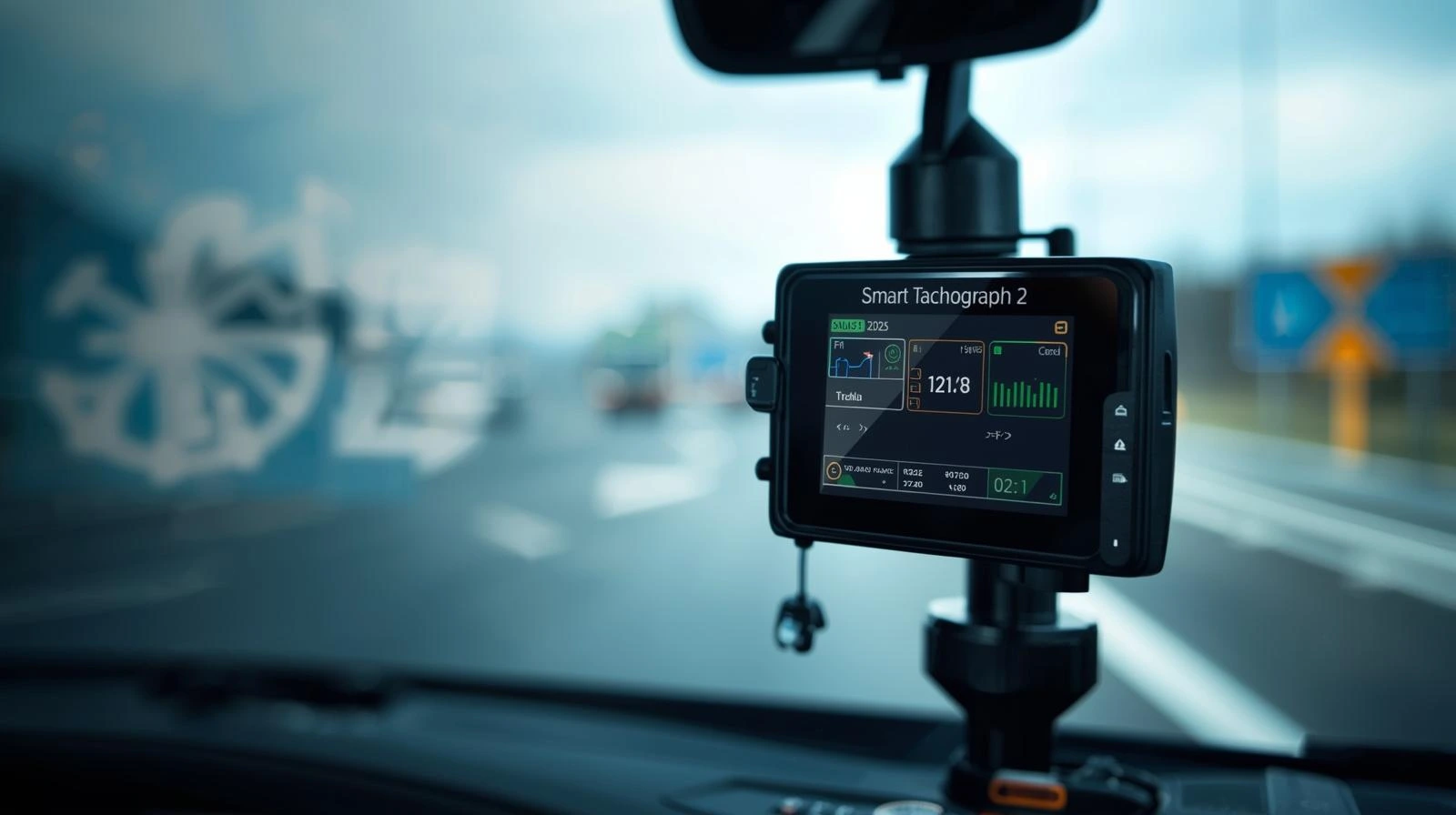
When a West Midlands international operator received a prohibition notice in December 2025 for operating with an outdated tachograph system, it wasn’t for a technical malfunction. The vehicle, regularly crossing into Europe, was still fitted with Smart Tachograph 1 despite the August 2025 retrofit deadline having passed four months earlier. The resulting delays, fines, and reputational damage could have been avoided with proper planning. Yet this operator isn’t alone: many UK fleet managers remain unclear about their obligations under the new regulations.
Smart Tachograph 2 represents a significant advancement in commercial vehicle monitoring technology. Unlike its predecessor, the generation 2 system automatically records border crossings between EU member states, eliminating manual entry requirements and reducing opportunities for record manipulation. The system provides enhanced fraud resistance through improved encryption and real-time data transmission capabilities.
For UK operators engaged in international transport, this technology serves a dual purpose: ensuring compliance with drivers’ hours regulations whilst providing robust evidence during DVSA roadside checks or compliance investigations. The
DVSA’s updated enforcement strategy makes clear that proper tachograph compliance will receive increased scrutiny throughout 2025 and beyond.
The regulations are unambiguous: any vehicle currently equipped with Smart Tachograph 1 and used for international transport must be retrofitted with Smart Tachograph 2 by 18 August 2025. This deadline applies regardless of vehicle age or frequency of international journeys. For vehicles with a gross vehicle weight between 2.5 and 3.5 tonnes, operators have slightly longer, with compliance required by 1 July 2026.
Crucially, these requirements affect only vehicles engaged in international operations. Vehicles operating solely within the UK face no immediate obligation to retrofit, though many operators are choosing to upgrade their entire fleets to maintain consistency across operations and future-proof their compliance systems.
The DVSA has confirmed that enforcement will be immediate and uncompromising. Vehicles found operating internationally without compliant tachograph systems face prohibition notices, financial penalties, and potential impacts on Operator Compliance Risk Scores (OCRS). For operators with existing compliance concerns, non-compliance adds another layer of regulatory risk.
The transition to Smart Tachograph 2 has exposed several critical misunderstandings amongst operators:
Assuming domestic-only vehicles are exempt indefinitely. Whilst current regulations don’t mandate retrofitting for purely domestic operations, this could change. More significantly, vehicles may occasionally undertake international work, and a single cross-border journey without compliant equipment triggers enforcement action.
Underestimating installation timeframes. Tachograph centres are experiencing unprecedented demand. Operators booking retrofits in late July or early August 2025 risk missing the deadline entirely. Workshop capacity constraints mean planning should have commenced months ago.
Neglecting driver familiarisation. Smart Tachograph 2 interfaces differ from previous versions. Drivers unfamiliar with the new systems make data entry errors, fail to properly record activities, or inadvertently create compliance gaps that appear suspicious during audits.
Overlooking data management implications. The extended record-keeping requirement, effective from April 2025, mandates operators produce 56 days of drivers’ records on international journeys, doubled from the previous 28-day requirement. Systems inadequate for this data volume create compliance vulnerabilities.
Operators still facing the retrofit deadline should take immediate action:
Audit your fleet immediately. Identify which vehicles currently fitted with Smart Tachograph 1 undertake any international work. Review the past 12 months of operations to catch occasional cross-border journeys that might not be immediately obvious.
Book installation capacity now. Contact approved tachograph centres to secure installation slots. Request written confirmation of appointment dates and expected completion timeframes. Budget for potential vehicle downtime during installation.
Verify calibration requirements. Smart Tachograph 2 installation requires full system calibration. Ensure your chosen installer is properly authorised and equipped to complete the work to DVSA standards.
Update data download procedures. Smart Tachograph 2 generates different file formats. Verify your tachograph analysis software is compatible with the new system before vehicles return to service.
Installing new hardware addresses only half the compliance challenge. Drivers must understand how Smart Tachograph 2 differs from previous systems, particularly regarding:
Comprehensive driver training programmes should be completed before vehicles equipped with Smart Tachograph 2 enter service. This isn’t merely best practice: it’s essential evidence demonstrating professional competence should compliance questions arise during DVSA encounters or Traffic Commissioner inquiries.
The DVSA has invested significantly in technology and training to detect non-compliant tachograph systems. Roadside enforcement teams now carry equipment capable of immediately identifying Smart Tachograph 1 devices in vehicles engaged in international work post-deadline.
Penalties extend beyond immediate prohibition notices. Non-compliance affects OCRS ratings, potentially triggering additional scrutiny of the entire operation. For operators already managing compliance challenges, tachograph system failures provide Traffic Commissioners with clear evidence of inadequate systems and professional oversight.
The UK’s continued alignment with EU regulations means operators serving European markets must meet these standards to maintain market access. Post-Brexit enforcement cooperation ensures UK vehicles face stringent checks when crossing borders, with non-compliant systems detected by automated systems at channel crossings.
The August 2025 Smart Tachograph 2 retrofit deadline isn’t a suggestion: it’s a legal requirement with immediate enforcement consequences. Operators who’ve delayed action now face compressed timeframes, limited workshop availability, and increased costs.
More significantly, non-compliance affects more than individual vehicles. It demonstrates to regulators a fundamental failure to maintain awareness of changing requirements, precisely the type of systemic weakness that transforms routine DVSA encounters into public inquiry material.
For operators uncertain about their current compliance position or retrofit requirements, professional tachograph and drivers’ hours audits provide clarity before enforcement action arrives. In a regulatory environment where DVSA roadside checks are intensifying and Traffic Commissioners are taking increasingly firm stances on compliance failures, prevention remains considerably less expensive than cure.








Email us at:
info@lloydmorgangroup.co.uk
Find us at:
Lloyd Morgan Group Ltd
Phoenix House,
Hemlock Park,
Hyssop Close,
Cannock.
WS11 7GA