No products in the basket.
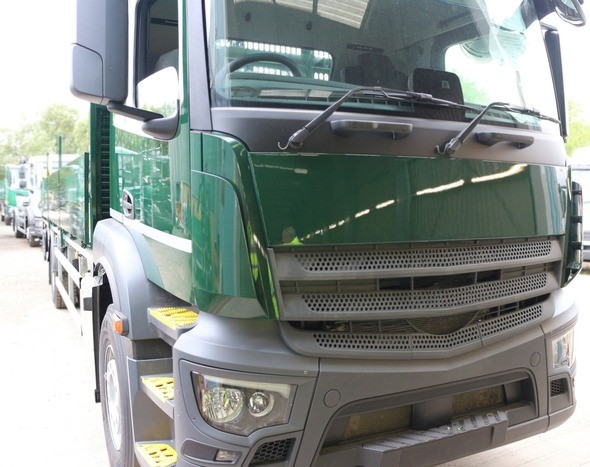
On 21 November 2025, the authorities released a new version of the Individual Vehicle Approval (IVA) inspection manual covering vehicles in categories N2 and N3 — that is, medium- and heavy-duty goods vehicles (HGVs). GOV.UK This isn’t the standard annual inspection (MOT) manual you might be used to — it’s the IVA manual, which sets out the technical standards and construction requirements that must be met before a vehicle is approved for licence and registration in the UK. GOV.UK+2GOV.UK+2
Because this update affects the IVA regime rather than routine MOT tests, it is particularly relevant to anyone building, importing, converting or substantially modifying HGVs.
The Driver and Vehicle Standards Agency (DVSA)’s IVA scheme exists to verify that individual vehicles — especially those not manufactured under standard European type-approval — comply with UK technical and safety standards before being put on the road. GOV.UK+2GOV.UK+2
Whereas an MOT focuses on the roadworthiness of a completed vehicle (e.g. brakes, lights, emissions), an IVA inspection focuses on how the vehicle was constructed or adapted, including fundamental structural and design aspects. GOV.UK+2GOV.UK+2
The IVA route applies to a wide range of vehicles: passenger cars (M-categories), light goods vehicles (N1), heavy goods vehicles (N2 & N3), trailers (O categories), and buses/coaches (M2/M3). GOV.UK+2GOV.UK+2
For N2/N3 vehicles, the manual defines:
The 2025 release includes a revised version of the IVA manual for N2 and N3 vehicles, effective from 28 November 2025. GOV.UK According to industry commentary, key changes cover: Garage Wire
These updates reflect evolving safety and environmental standards, and reinforce the rigorous regulatory oversight associated with the IVA process.
If you deal with HGVs in any of these capacities — building, importing, converting or modifying — these changes are not trivial. Compliance with the updated manual will be mandatory for any new IVA submissions for N2/N3 vehicles from late November. Non-compliance could result in failure to obtain an Individual Approval Certificate (IAC), preventing licensing and registration.
Even if a vehicle passes a standard MOT, that does not guarantee it would satisfy the IVA requirements. The IVA assessment looks deep into construction details, structural integrity, protective devices, and compliance with statutory safety specifications. GOV.UK+2GOV.UK+2
The updated manual underlines that certain components (e.g. side guards, couplings, protective devices) must meet strict dimension, mounting, and documentation standards — so operators should review conversions or modifications carefully before submission for IVA inspection.




Email us at:
info@lloydmorgangroup.co.uk
Find us at:
Lloyd Morgan Group Ltd
Phoenix House,
Hemlock Park,
Hyssop Close,
Cannock.
WS11 7GA