No products in the basket.
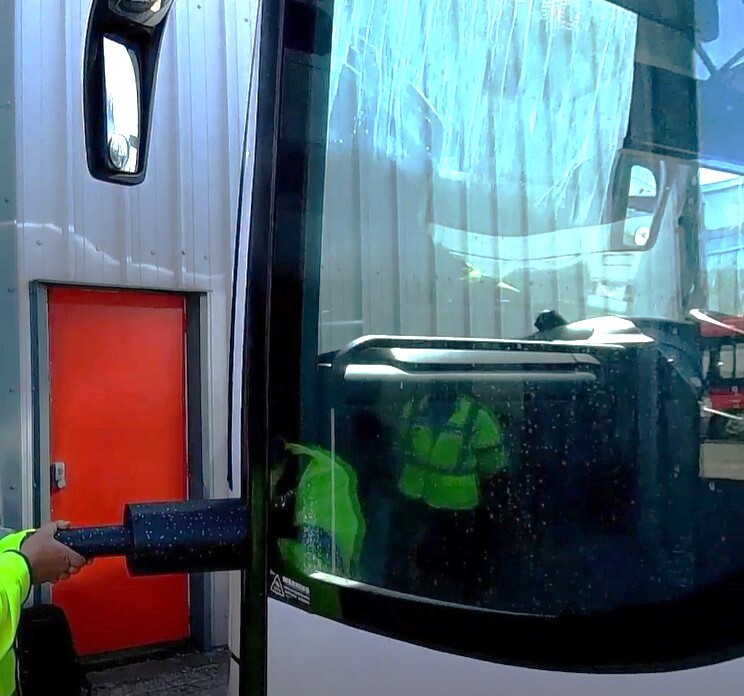
The Driver and Vehicle Standards Agency (DVSA) has announced a significant update to the way Public Service Vehicle (PSV) door safety systems will be tested. Starting 5 January 2026, all DVSA assessors will be equipped with a newly approved tool designed to improve both safety and consistency during annual vehicle inspections.
This change marks a milestone in DVSA’s ongoing commitment to modernising testing procedures, protecting staff, and ensuring that safety standards remain robust across the transport sector.
Until now, PSV door safety systems were tested manually, requiring assessors to place their hands near closing doors to check resistance. The new tool eliminates this risk by allowing examiners to apply resistance safely, keeping their hands clear of the mechanism.
This means operators and ATFs do not need to make any technical changes to their vehicles. The vehicles must continue to meet the same safety requirements; the difference lies in how those requirements are verified.
The decision to roll out this innovation follows extensive consultation and nationwide trials. Feedback from assessors and trade unions highlighted the need for a safer, more reliable approach.
By standardising the process, DVSA aims to build greater confidence in the fairness and reliability of annual PSV safety checks.
For PSV operators, the message is clear: no changes are required to vehicles themselves. However, operators should prepare their teams for the updated testing method.
This proactive communication will help avoid confusion during inspections and ensure a smooth transition.
The introduction of the tool is expected to have several positive impacts across the PSV sector:
For passengers, the update indirectly reinforces confidence in PSV safety standards, ensuring that vehicles continue to meet rigorous requirements.
This development is part of DVSA’s broader strategy to modernise vehicle testing and safeguard its workforce. By listening to assessors and unions, DVSA has introduced a practical solution that balances safety with efficiency.
As the January 2026 deadline approaches, operators are encouraged to familiarise themselves with the change and communicate it clearly within their organisations. While the vehicles themselves remain unaffected, understanding the new testing method will help ensure inspections run smoothly.
The rollout of DVSA’s new PSV door safety testing tool represents a forward-thinking step in transport safety regulation. By prioritising staff welfare and standardising procedures nationwide, DVSA is reinforcing its role as a guardian of road safety.
From 5 January 2026, PSV operators can expect a safer, more consistent testing experience—one that maintains the integrity of existing standards while modernising the way they are enforced.
How can we help? Here at Lloyd Morgan Group, inspections cover everything from routine roadworthiness checks and driver walk‑around “gate checks” to end‑of‑lease assessments, accident repair verification, and school transport audits. By identifying issues early, we reduce downtime, improve MOT pass rates, and support safer, more efficient fleet operations.







Email us at:
info@lloydmorgangroup.co.uk
Find us at:
Lloyd Morgan Group Ltd
Phoenix House,
Hemlock Park,
Hyssop Close,
Cannock.
WS11 7GA